Comparing Saffron Grades - Kashmiri Mongra, Iranian Sargol, and Spanish Mancha
Share
Comparing Saffron Grades - Kashmiri Mongra, Iranian Sargol, and Spanish Mancha
Saffron is the most expensive spice on earth, but not all saffron is created equal. The stigmas harvested from Crocus sativus differ significantly depending on where the flowers were grown, how they were processed, and which part of the stigma ended up in the jar. Each variety has a distinct origin, identity, and culinary purpose.
The Three Varieties
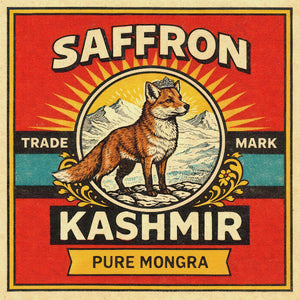
Kashmiri Mongra comes from the Pampore region of Kashmir, grown at high altitude and dried over charcoal in a slow, traditional process. Mongra is the rarest of the three: global supply is extremely limited, authentic threads almost never appear on grocery shelves, and the name is widely counterfeited. When it is genuine, it is considered the finest saffron in the world.
Iranian Sargol is the backbone of the global saffron trade. Iran produces roughly 90 percent of the world's saffron, and Sargol (meaning "top of the flower" in Persian) is its premier export grade, consisting only of the red tips of the stigma trimmed free of the yellow style below. It is the most widely available high-quality saffron, and the most rigorously lab-tested.
Spanish La Mancha carries a Denominacion de Origen and comes from the Castilla-La Mancha plateau, where a dry continental climate produces thick, wide stigmas with a distinctive earthy warmth. Spain's saffron tradition is ancient, though today Spain re-exports large quantities of imported Iranian and Indian saffron under generic "Spanish saffron" labels. Genuine DO-certified La Mancha is a different product entirely.
Comparing the Characteristics
Color
Color intensity in saffron is measured by crocin content under ISO 3632. Higher numbers mean deeper, more stable color in the finished dish.
Kashmiri Mongra consistently scores above 250, the highest of any commercial variety. Its threads release a deep, burnished gold that holds even with long cooking. Iranian Sargol follows closely at 220 to 260; the range overlaps with Mongra at its peak, and top-grade Sargol is genuinely competitive. Spanish La Mancha typically falls between 190 and 230, making it high-quality but measurably less potent by the numbers. For dishes where color is a priority, such as a saffron rice or a bouillabaisse, Mongra and Sargol pull ahead.
Aroma
This is where the three diverge most sharply. Mongra's aroma is dense, honeyed, and complex, with notes of leather, hay, and dried fruit. It is unlike any other spice and unlike any other saffron. Sargol is floral and clean, with a slightly medicinal edge that reads as bright and direct rather than layered. La Mancha is the most restrained of the three: earthy, warm, and faintly sweet, integrating into dishes without announcing itself. None of these is inferior; they suit different hands and different cooking styles.
Flavor and Bitterness
Bitterness in saffron comes from picrocrocin, the compound that degrades into safranal during drying and gives saffron its characteristic taste. Mongra has the highest picrocrocin levels and the most assertive finish. A small pinch bloomed in warm water delivers a noticeably bitter, lingering complexity. Sargol is comparably bitter, though slightly more linear in its flavor. La Mancha is milder, making it forgiving for cooks still calibrating how much to use.
Appearance
Mongra threads are long, intact, deep burgundy, and slightly leathery, retaining a trace of moisture from the charcoal-drying process. Sargol threads are shorter, uniformly crimson, dry, and brittle. La Mancha threads are wide and trumpet-shaped at the tip, often with a brick-red hue rather than true crimson, sometimes with visible orange or yellow where the style has not been fully removed. Thread appearance is a useful authenticity check: adulterated saffron often includes yellow style or dyed plant matter mixed in.
Best Culinary Uses
Mongra's intensity and complexity make it ideal as a finishing element or in preparations where saffron is the centerpiece: Kashmiri kahwa, mutton yakhni, saffron-milk desserts. It would be wasted in a dish with many competing flavors. Sargol is an all-purpose workhorse suited to everything from Persian rice to Moroccan tagines to Italian risotto Milanese. Its clean profile plays well across traditions. La Mancha's earthiness and milder potency are a natural fit for paella, Spanish rice dishes, and slow-cooked Mediterranean stews where the saffron should meld rather than dominate.
Sourcing and Authenticity
All three varieties face significant adulteration risk, though at different points in the supply chain. Mongra is so scarce that most retail products labeled as such are fraudulent. Sargol is frequently adulterated at the wholesale level: Pushal (lower-grade threads retaining the yellow style) is mixed in, or threads are soaked in water to add weight before sale. La Mancha is undermined by the broad misuse of "Spanish saffron" as a label for re-exported product with no connection to the DO region. In all three cases, the only reliable protection is buying from importers who publish ISO 3632 test results for each batch.
On Quality: Why Kashmiri Mongra Stands Apart
By every measurable standard (crocin, picrocrocin, safranal) and by the consensus of chefs and spice specialists who have worked with all three, Kashmiri Mongra is the finest saffron available. Its combination of altitude-grown Crocus sativus, hand-harvesting at peak bloom, and traditional charcoal drying produces a concentration of aromatic compounds that no other commercial variety matches. The color is deeper, the aroma more complex, and the flavor more persistent.
That superiority comes with a caveat - Mongra is only as good as its provenance. The variety's reputation is so high, and supply so limited, that fraud is routine. A jar of genuine, verified Kashmiri Mongra is a different experience from any other saffron. A jar of counterfeit Mongra is an overpriced disappointment.
For occasions when saffron is the point of the dish rather than an ingredient in it, nothing competes with the real thing from Kashmir.